The most useful marketing success stories explain the business goal, the strategy, and the evidence behind the result. H&O Consulting’s work with Maison Dentists in Katy, Texas, B-You Dentistry in Suwanee, Georgia, and Luxe Home Furnishings in New Jersey shows how different approaches can support visibility, channel exploration, and sales conversations.
By H&O Consulting | September 2026 client spotlight
Maison recorded approximately 34,900 views on a comic-style dental Reel. B-You launched its first ChatGPT advertising campaign. Luxe’s campaign report recorded 181 messaging conversations around its Labor Day promotion, with increased sales reported by H&O. These cases cover different reporting periods within September.
What these marketing success stories show about strategy
A campaign starts with a decision about what the business needs customers to do next. A dental practice may want people to engage with educational content. Another may want to explore a new advertising channel. A furniture retailer may need shoppers to ask questions before purchasing.
These marketing success stories use different measures because the objectives differ. Video views describe content visibility. Launching an advertisement establishes a testing opportunity. Messaging conversations create opportunities for a sales team to respond.
For owners reviewing marketing success stories, the useful question is whether the reported achievement matches the original objective. That distinction also makes the next step clearer: measure inquiries after content exposure, conversions after an advertising launch, and purchases after sales conversations.
Maison Dentists: From 164 to nearly 35,000 video views
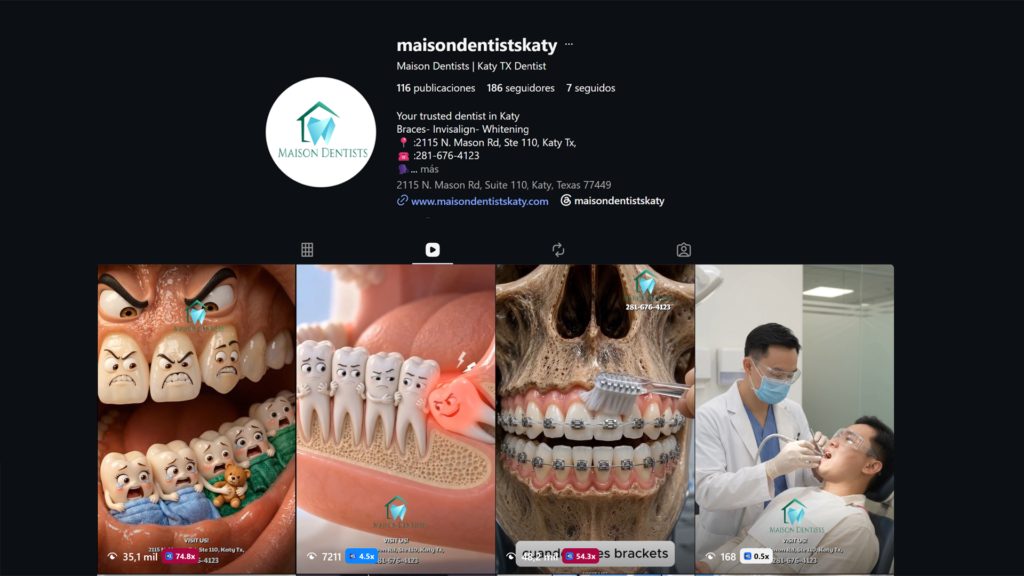
Maison Dentists serves patients in Katy, Texas. H&O developed comic-style dental videos that use expressive tooth characters and visual situations to introduce educational topics.
The supplied Instagram screenshots show approximately 34,900 views on one animated Reel, compared with 164 on a separate Reel showing a clinical scene. The profile displayed 185 followers when captured on September 27, 2026.
That is approximately 213 times the displayed views of the comparison post. The figures describe different videos; they do not show one video growing from 164 to 34,900 views.
The format gives viewers a story to follow. Characters and expressions introduce the situation, while the dental subject gives the content its educational purpose. Clinical explanations should remain accurate and be reviewed by the practice.
Among these marketing success stories, Maison demonstrates the potential of adapting an educational subject to a visually engaging format. A small follower count did not prevent the Reel from recording a much larger view count.
The available screenshots do not establish unique viewers, local patient reach, appointment bookings, or whether paid promotion contributed. The next step is to connect attention with profile visits, qualified inquiries, and appointments.
B-You Dentistry: Launching its first ChatGPT ad campaign
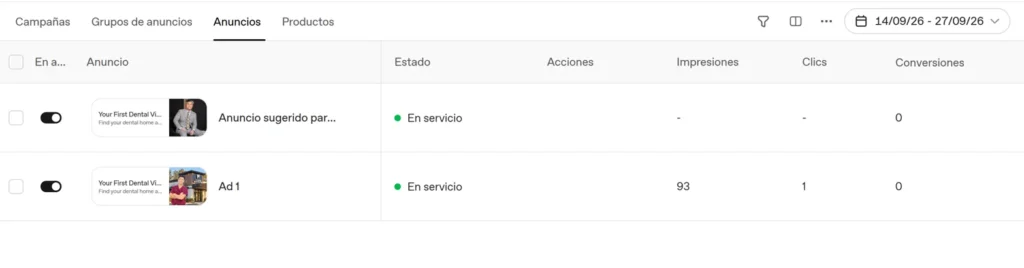
B-You Dentistry in Suwanee, Georgia, worked with H&O to launch its first ChatGPT advertising campaign. The supplied dashboard shows a first-visit advertisement marked “In service.”
The objective was to begin exploring another way for prospective patients to discover the practice. B-You took the initiative to test the channel and create a starting point for future campaign learning.
ChatGPT has dedicated advertising infrastructure, including campaign management and conversion measurement tools, as described in OpenAI’s advertising documentation.
This case expands the discussion of marketing success stories to include a launch milestone. B-You can now evaluate the campaign as data becomes available, rather than base future decisions entirely on assumptions about the channel.
The screenshot does not establish a performance result: impressions and clicks appear as dashes, and conversions show zero in the selected view. It also cannot demonstrate whether competitors have already advertised there.
The next evaluation should examine delivery, qualified inquiries, and booked appointments. Describing B-You as proactive is supported by the launch; claiming market leadership would require competitive evidence.
Luxe Home Furnishings: 181 conversations around Labor Day
For Luxe Home Furnishings in New Jersey, H&O planned a Labor Day campaign from September 4–7, 2026. It began with a teaser phase to build anticipation, followed by sales-focused advertising through the holiday promotion.
Messaging gave interested shoppers a direct way to contact the business. Furniture purchases can involve questions about dimensions, availability, delivery, and payment options. A conversation lets the sales team address those questions before the shopper decides.
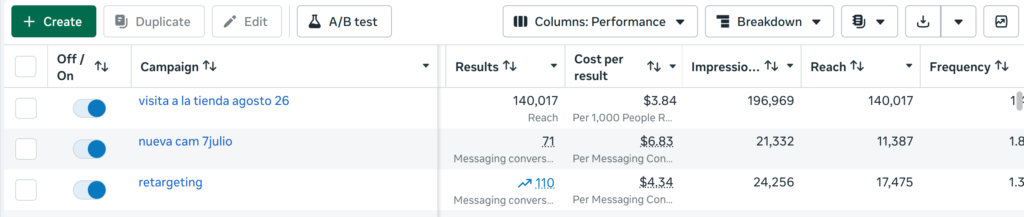
The Meta export, labeled Yulissa Home in the source account, covers September 3–7. The owner confirmed that this is the Luxe Home Furnishings case. Two messaging campaigns recorded:
- Retargeting: 110 conversations, with $477.52 spent.
- The second messaging campaign: 71 conversations, with $484.94 spent.
- Combined: 181 conversations, $962.46 spent, and approximately $5.32 per conversation.
Luxe belongs in these marketing success stories because the campaign connected a seasonal sales objective with a direct contact method. H&O reports increased sales, and the client’s supplied feedback describes the weekend as successful.
The export measures conversations started, rather than purchases or individual messages. It does not isolate September 4–7 from the extra reporting day. A separate reach campaign brought total spend across the three exported campaigns to $1,499.65; the conversation cost above uses messaging spend only.
How to apply these lessons to your business
Use marketing success stories to identify decisions worth testing in your own business. Begin with the objective, choose a suitable format or channel, and define the evidence you will need to evaluate it.
Keep your website involved in that process. Explain your services, answer practical questions, and make contacting the business straightforward. For AI search visibility, Google’s guidance on AI features and websites emphasizes established SEO practices, accessible content, and accurate structured data. It does not require special AI markup or guarantee inclusion.
H&O connects content, advertising, websites, and follow-up around business goals. Explore H&O Consulting’s digital marketing services and request a consultation to discuss which customer action your next campaign should support.
Frequently Asked Questions - Marketing success stories